THE TEST
A swinging heel
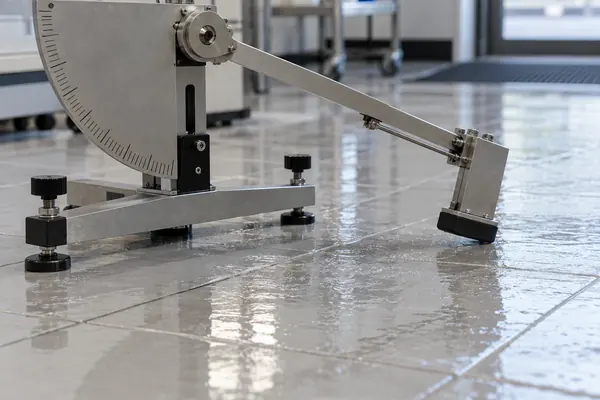
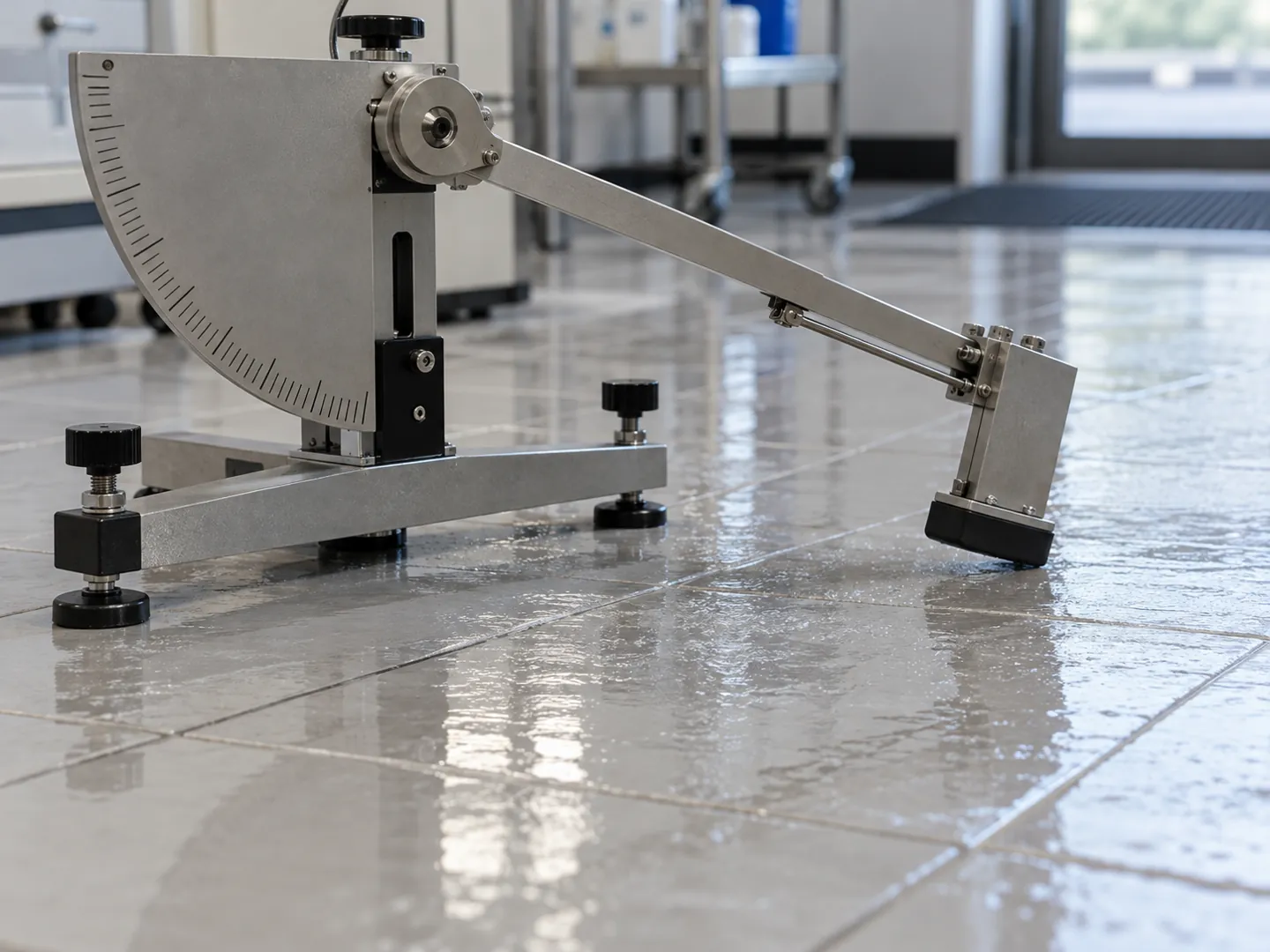
HSE's preferred test is the pendulum: a rubber imitation heel sweeps across the floor and gives a pendulum test value (PTV).
Read a rating doodletiles
00WHAT THE SAFETY GUIDANCE SAYS
Most slips happen on floors that are wet or dirty.
HSE says slips and trips are the most common cause of injury at work, and most slips happen on contaminated floors. Choosing tiles for a kitchen, bathroom or shop doorway means reading slip ratings the way safety scientists do.
Read a rating01Principles
02THE SHORT ANSWER
A tile that grips when dry may not when wet.
HSE's tests are built around that.
THE TEST
HSE's preferred test is the pendulum: a rubber imitation heel sweeps across the floor and gives a pendulum test value (PTV).
Read a ratingTHE SURFACE
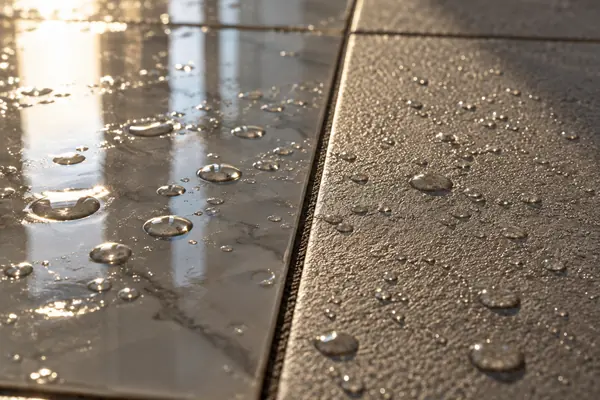
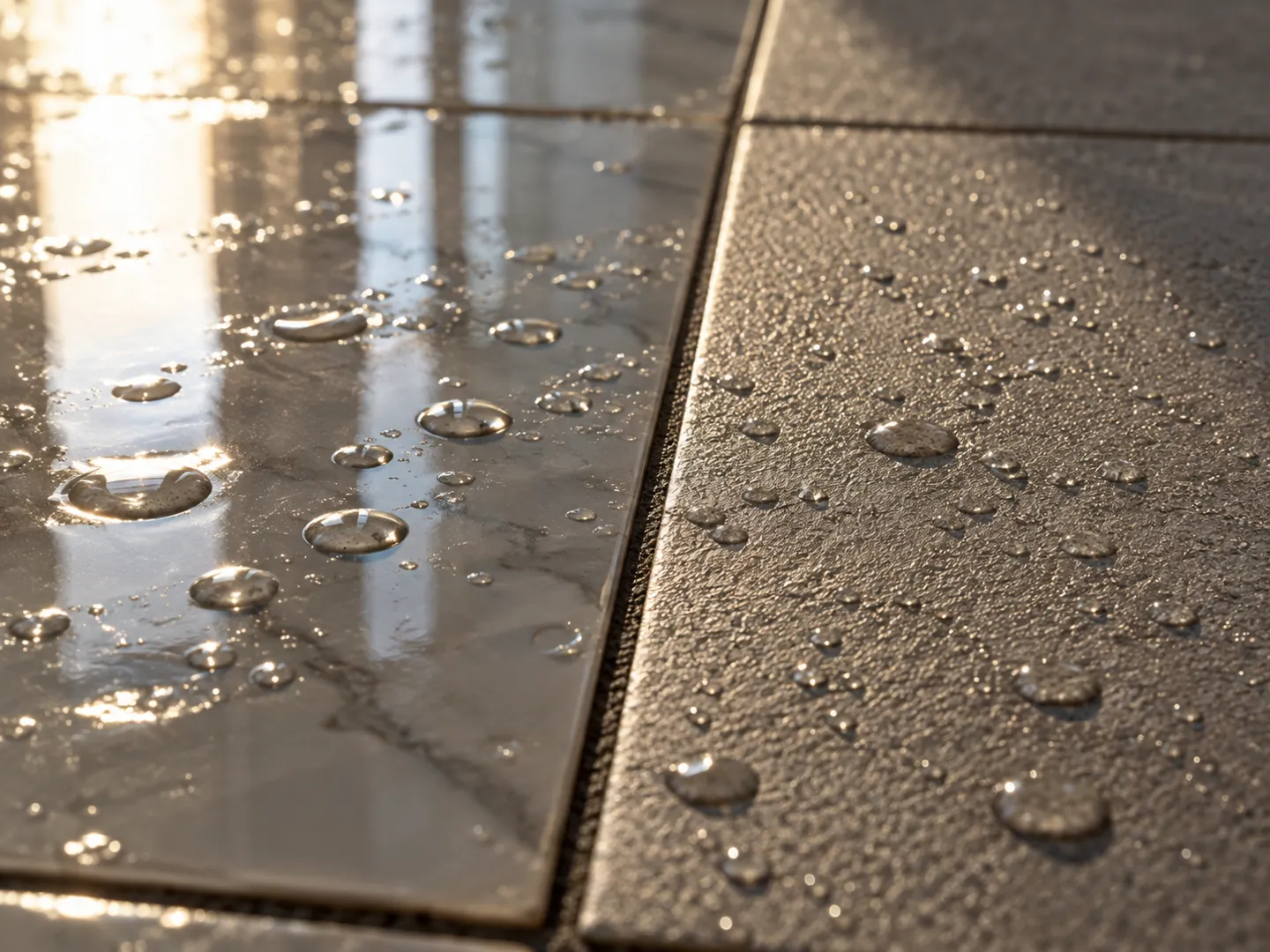
Microroughness, measured as Rz, predicts slipperiness when wet. HSE classes 20 µm or more as low slip potential.
See the numbersTHE LABEL
HSE says floors rated R9 (or sometimes R10) under the German ramp test will be slippery in wet or greasy conditions.
Before you buy03A QUICK RATING CHECK
Pick a test result to see how HSE's tables classify it. The bar shows the slip potential.
Based on HSE's technical information sheet Assessing the slip resistance of flooring, which reproduces UK Slip Resistance Group tables. Written for workplaces; the same physics applies at home.
04TWO NUMBERS WORTH KNOWING
One figure on harm,
one on the line between safe and slippery.
40%
Share of reported major injuries at work
HSE's INDG225 says slips and trips cause on average 40 per cent of all reported major injuries at work, and are the most reported injury to members of the public.
HARM · HSE
36+ PTV
Pendulum value for low slip potential
Below 36 the slip potential is moderate, and below 25 it is high. HSE uses the pendulum for floors in both dry and contaminated conditions.
THE LINE · HSE / UKSRG
HSE adds that R10 ramp ratings cover a coefficient of friction from 0.18 to 0.34, a very wide range of slip potential within one label.
05FOUR CHECKS
HSE's advice is aimed at workplaces, but the questions are the same for a busy kitchen floor or a shop entrance.
Data should describe the floor as finished for use, with the contamination it will normally see.
Pendulum and roughness figures are HSE's preferred measures; plain CoF figures should be viewed with uncertainty.
Grouting, cleaning, polishing and wear can change slip resistance significantly from the factory figure.
Use the right detergent at the right strength and leave smooth floors dry, or keep people off until they are.
06A CAUTIONARY TALE
HSE describes a new museum whose floor, chosen for its appearance, proved extremely slippery under low levels of wet contamination. Areas such as the bar and café would be wet in normal use.
Scientists from the Health and Safety Laboratory used pendulum and roughness tests, and an acid-etching treatment was found to raise the floor's friction and microroughness in foreseeably wet areas. HSE notes that slipperiness is seldom considered when floors are specified for looks.
07Questions
The result of HSE's preferred slip test, in which a swinging imitation heel with a standard rubber slider sweeps over the floor. PTV 36 and above means low slip potential; 25 to 35 moderate; 0 to 24 high.
They come from the German DIN 51130 ramp test, where R9 is slippery when wet and R13 the least slippery. HSE says R9, and sometimes R10, floors will be slippery in wet or greasy conditions.
Yes. HSE says the Rz roughness value gives a good indication of slipperiness when wet: below 10 µm high slip potential, 10 to 20 µm moderate, 20 µm or more low. Thicker contaminants need more roughness.
Yes. HSE says slipperiness can change significantly through grouting, cleaning, burnishing or polishing, after short periods of use, and with wear or poor maintenance.
HSE says slips and trips are the most common cause of injury at work, causing on average 40 per cent of reported major injuries, and most slips happen on contaminated floors.
08Sources
ABOUT THIS NAME
doodletiles.com is part of the DoodleSale portfolio. It isn't in an auction right now, but you can ask about leasing it.